

Short term medical insurance often confuses families when it comes to understanding cashless vs reimbursement claims during emergencies
Medical emergencies don’t ask for permission — they just happen. For many Indian families, the sudden shock isn’t only about the hospital, it’s the bill that comes after. Parents who worry about children’s safety, adults who think about aging parents, and families who track every rupee to manage monthly budgets… all experience the same fear:
“If something happens, will our health insurance or short term medical insurance actually help?”

The confusion usually starts at one point — claims. Specifically:
Cashless claim? Reimbursement claim? What’s the difference? Which one protects my family better?
TL;DR:
Cashless Claims → Hospital bills are settled directly by insurer at network hospitals.
Reimbursement Claims → You pay the bill first and insurer repays later (also applies in short term medical insurance).
Families should know both to avoid financial and emotional stress during emergencies.
Understanding the Claim Problem in short term medical insurance
Problem:
Most middle-class families buy health insurance or short term medical insurance but don’t fully understand the claim process. During emergencies, confusion about hospitals and insurance approvals creates unnecessary financial tension
Agitate:
Imagine a midnight emergency — you rush your father to the hospital, and while he’s being treated, someone at billing asks:
“Is it cashless? Do you have network approval? Will you pay now?”
At a time when focus should be on health, families end up handling paperwork and payments. Many regret later saying:
“We didn’t know how the claim process works.”
This lack of knowledge can cause:
- Sudden financial burden
- Treatment delays
- Claim rejections due to documentation
- Panic among kids and caregivers
- Savings getting drained (even when insured)
Solution:
Learning the difference between cashless and reimbursement claims — both in long-term and short term medical insurance — helps families:
- Choose better hospitals
- Avoid out-of-pocket payments
- Get faster approvals
- Protect emergency funds
What is a Cashless Insurance Claim?
A cashless claim allows treatment at network hospitals without paying major medical expenses upfront. The insurer directly settles the bill with the hospital based on policy terms.
Key Features of Cashless Claims in short term medical insurance
- Applies in most long-term and short term medical insurance plans
- Available only at network hospitals
- Requires pre-authorization
- Family pays only excluded or non-covered items
Ideal For:
Families who want speed + convenience during emergencies.
Example Scenario:
Your child is admitted for appendicitis at a network hospital. The insurer approves the cashless claim and pays directly. You pay only minor non-medical items.
Step-by-Step Process for Cashless Claims
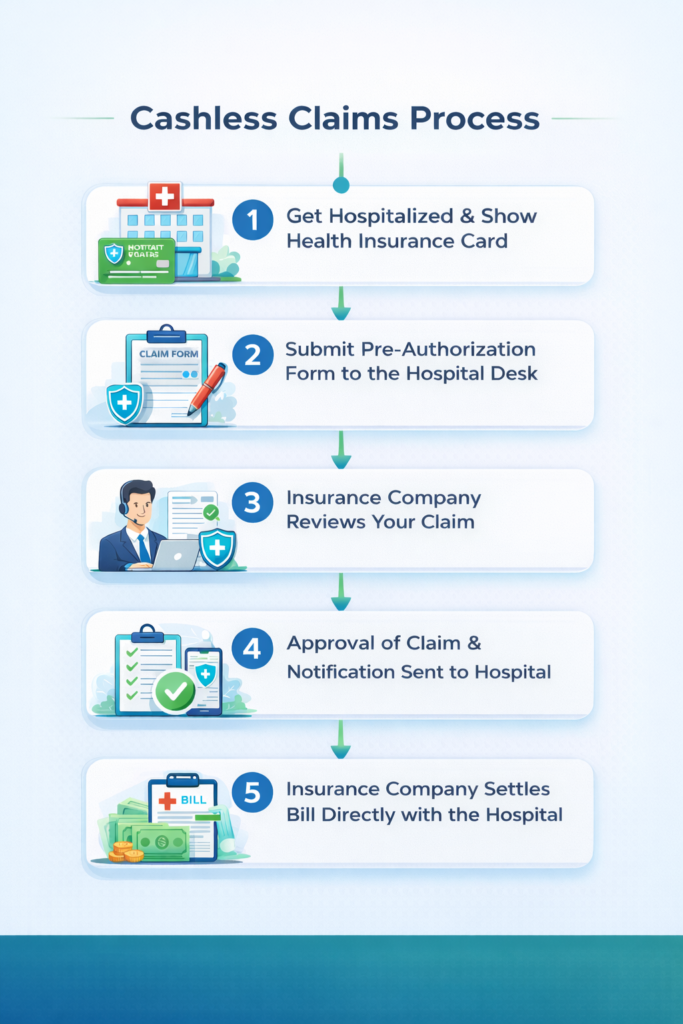
- Find a network hospital (list also available in short term medical insurance plans)
- Provide ID + health card
- Hospital sends pre-authorization
- Insurer reviews & approves
- Treatment + discharge
- Insurer settles eligible amount directly
- Family pays exclusions if any
Advantages & Limitations of Cashless Claims in short term medical insurance
Advantages:
- No large upfront payment
- Hassle-free documentation
- Quick access to treatment
- Ideal for families in crisis
Limitations:
- Only network hospitals eligible
- Exclusions not covered
- Rare approval delays
What is a Reimbursement Claim in short term medical insurance
A reimbursement claim means:
- Family pays the hospital first
- Insurance company refunds the amount later (submitted with documents)
Key Features of Reimbursement Claims:
- Works at any hospital
- Requires bill payments upfront
- Detailed paperwork required
Ideal For:
Families who prefer specialists, non-network hospitals, or using short term medical insurance while travelling
Example Scenario:
Your mother is admitted to a non-network hospital. You pay first, collect documents, and insurer reimburses after verification.
Step-by-Step Process for Reimbursement Claims
- Get admitted & pay bill
2. Collect documents:
- Discharge summary
- Bills & receipts
- Prescriptions
- Test reports
3. Fill claim form
4. Submit to insurer
5. Insurer verifies & settles
Advantages & Limitations of Reimbursement Claims
Advantages
- No large upfront payment
- Hassle-free documentation
- Quick access to treatment
- Ideal for families in crisis
Limitations
- Only network hospitals eligible
- Exclusions not covered
- Rare approval delays
What is a Reimbursement Claim in short term medical insurance
A reimbursement claim means:
- Family pays the hospital first
- Insurance company refunds the amount later (submitted with documents)
Key Features of Reimbursement Claims
- Works at any hospital
- Requires bill payments upfront
- Detailed paperwork required
Ideal For:
Families who prefer specialists, non-network hospitals, or using short term medical insurance while travelling.
Example Scenario
Your mother is admitted to a non-network hospital. You pay first, collect documents, and insurer reimburses after verification.
Step-by-Step Process for Reimbursement Claims
1.Get admitted & pay bill
2.Collect documents:
- Discharge summary
- Bills & receipts
- Prescriptions
- Test reports
3.Fill claim form
4.Submit to insurer
5.Insurer verifies & settles
Advantages & Limitations of Reimbursement Claims
Advantages:
- Treatment at any hospital
- Flexibility for specialist doctors
- Useful when cashless fails
Limitations:
- Funds needed upfront
- More paperwork
- Slower processing
- Stress during emergencies
Cashless vs Reimbursement — Key Differences for Families
| Feature | Cashless Claim | Reimbursement Claim |
|---|---|---|
| Upfront Payment | Not required | Required |
| Hospital Choice | Network only | Any hospital |
| Paperwork | Low | High |
| Claim Speed | Fast | Slow |
| Stress | Lower | Higher |
| Applies to Short Term Medical Insurance | Yes | Yes |
Role of Short Term Medical Insurance in Claims
Many families today choose short term medical insurance for situations like:
- Temporary jobs
- Travel
- City relocation
- Gap periods between policies
Most short term medical insurance plans support:
✔ Cashless claims at partner hospitals
✔ Reimbursement claims at non-network hospitals
Before buying, families should confirm:
- Network hospital coverage
- Claim process
- Waiting periods
- Exclusions
- Document requirements
This ensures short term medical insurance actually helps during medical emergencies instead of adding confusion.
FAQs (Frequently Asked Questions)
Q1. Does short term medical insurance support cashless claims?
Yes, many plans do, but only at partner network hospitals.
Q2. Can reimbursement claims be filed under short term medical insurance?
Yes, if bills and documents are submitted properly.
Q3. Which claim type is better for families?
Cashless during emergencies, reimbursement for non-network preferences.
Q4. How long does reimbursement take?
7–30 days depending on insurer and documentation.
Q5. Can both claim types exist in the same family policy?
Yes, including in short term medical insurance arrangements.
Conclusion
Cashless claims provide speed, convenience, and less financial tension, making them ideal for middle-class and upper-middle-class families. Reimbursement claims offer flexibility and work well when network hospitals are not an option.
Families choosing long-term or short term medical insurance should learn both claim processes to avoid panic, protect savings, and ensure smooth treatment during emergencies.
Health insurance doesn’t just protect life — it protects dignity, financial stability, and peace of mind for parents and children alike.